Greek
Paired Heads
What “janiform” means
“Janiform” describes heads arranged back to back. Although the term derives from Janus, Greek paired-head vessels do not necessarily represent the Roman god.
Greek vessels and contrasting identities
Athenian potters made paired-head vessels by the end of the sixth century BCE. Examples combine a satyr and a woman, Herakles and Omphale, or two female heads. The pairings give different identities a shared sculptural form.
Source: The Metropolitan Museum of Art, on the Athenian tradition and its Etruscan adaptations.
A vessel used and turned
A kantharos is a wine cup with high handles, used in the symposium, the ancient drinking gathering. Turning a paired-head cup brings its second face into view. Its function makes movement part of the experience of the object.
Source: Archaeological Museum of Thessaloniki, janiform head-kantharos from Akanthos.
What the sculpture takes, and what it changes
From the Greek tradition Janus of Love takes the shared form: two heads, one object, no single correct viewpoint. The kantharos with two female heads in the Metropolitan Museum (12.234.5), made in Athens around 490 BCE, is the only object on this site that places two women's faces back to back; it is the sculpture's closest ancient relative and opens the gallery below. What the sculpture changes is the subject. The Greek pairings set different identities against each other. Petrides pairs the same woman with herself, at two moments of one love, and lets the difference in expression carry the meaning.
Examples in museum collections
Historical comparisons from museum collections. Select an image to enlarge; each record links to the holding collection.
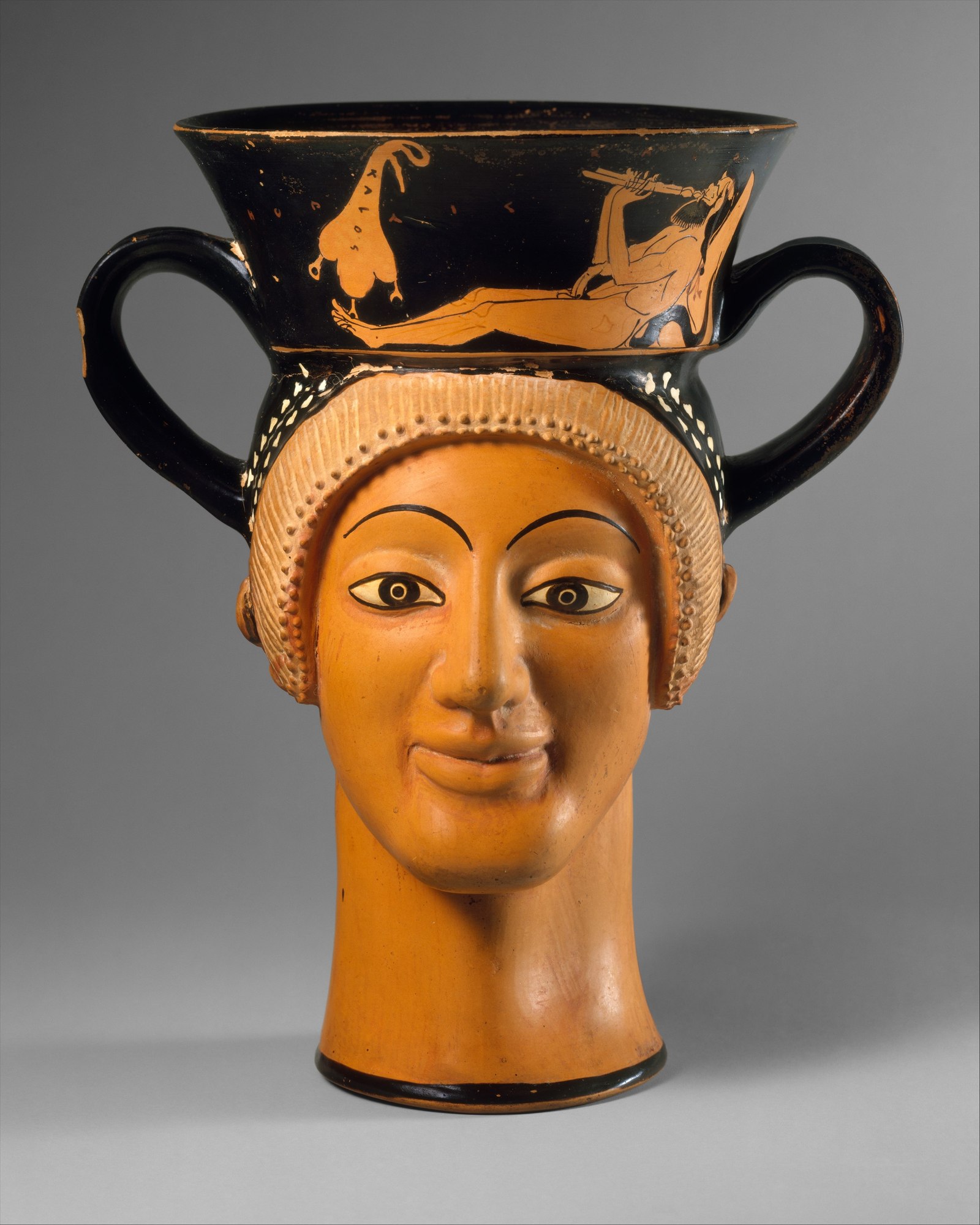
Two female heads
Greek, Attic, c. 490–480 BCE. Terracotta kantharos attributed to the Brygos Painter; Providence Class. The Metropolitan Museum of Art, 12.234.5. Rogers Fund, 1912.
Museum record ↗
Image: The Met · Public domain / CC0.
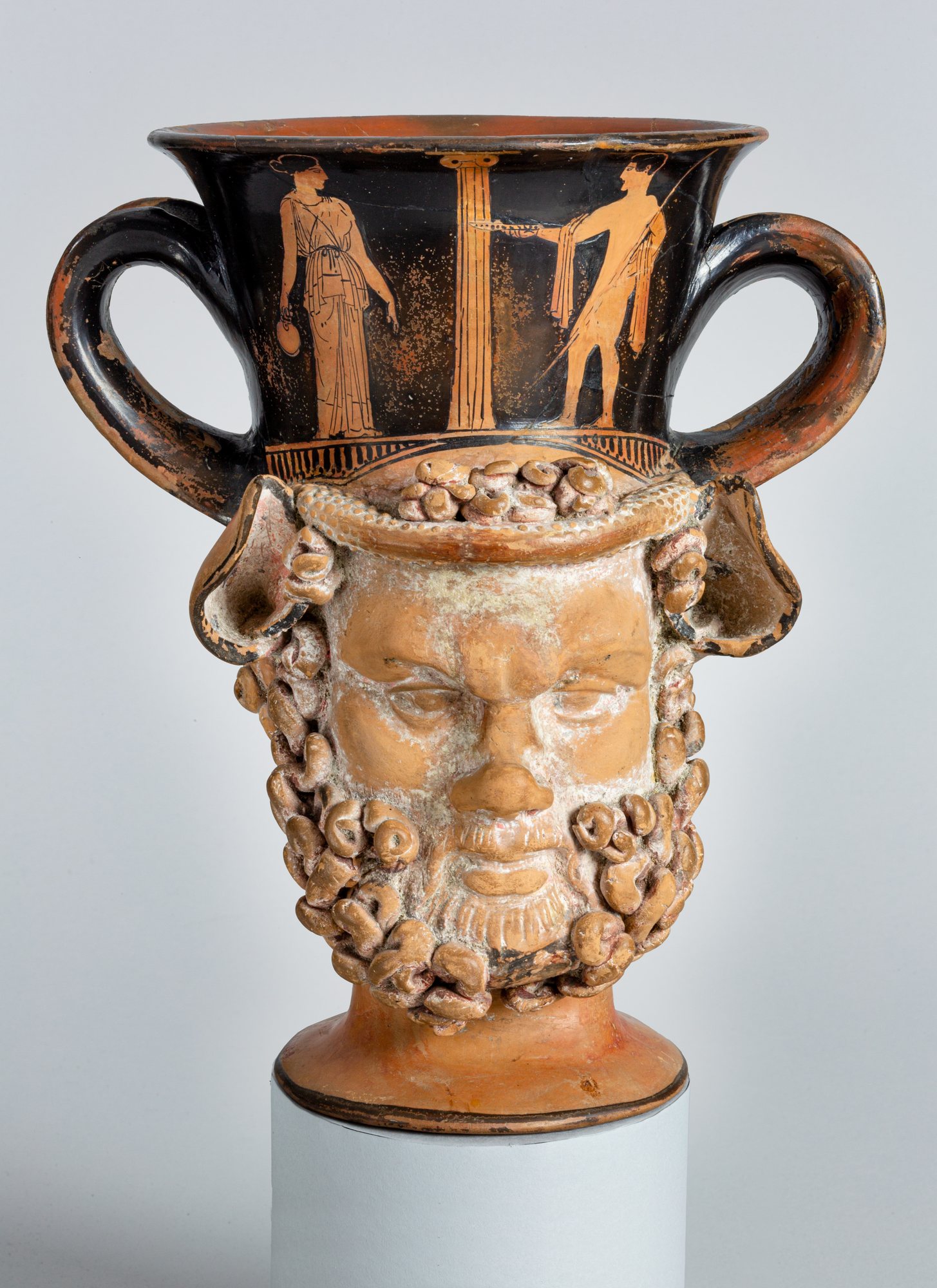
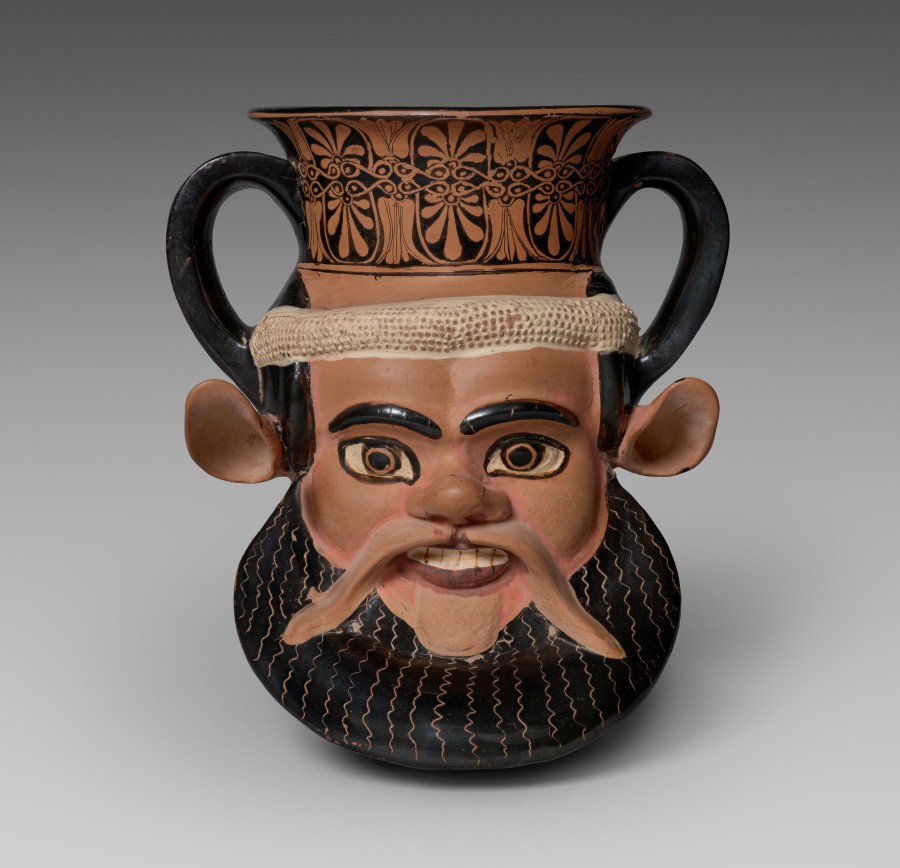
A satyr and a woman
Greek, Attic, c. 420 BCE. Terracotta kantharos attributed to Aison; Spetia Class. The Metropolitan Museum of Art, 27.122.9. Fletcher Fund, 1927.
Museum record ↗
Image: The Met · Public domain / CC0.
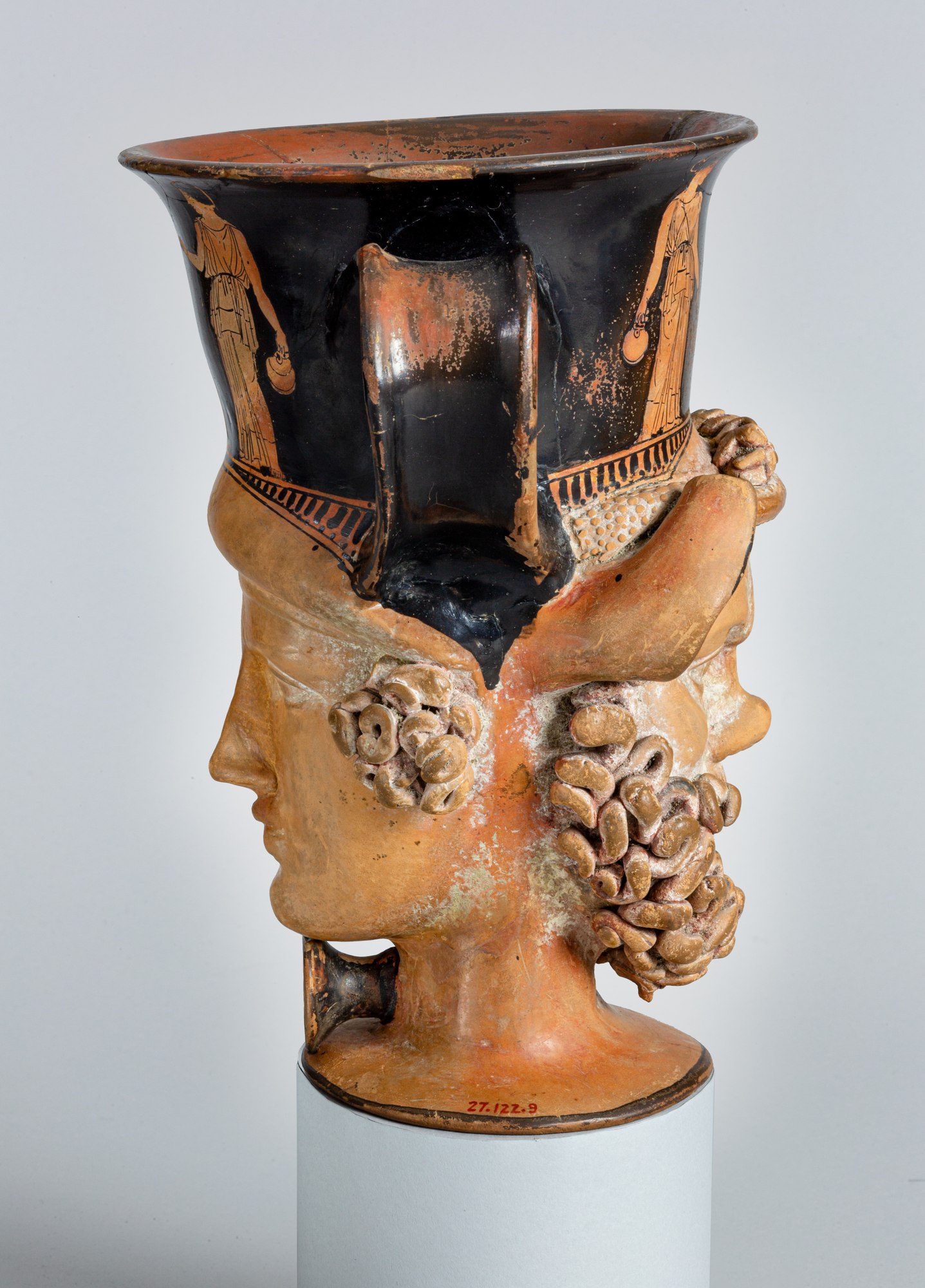
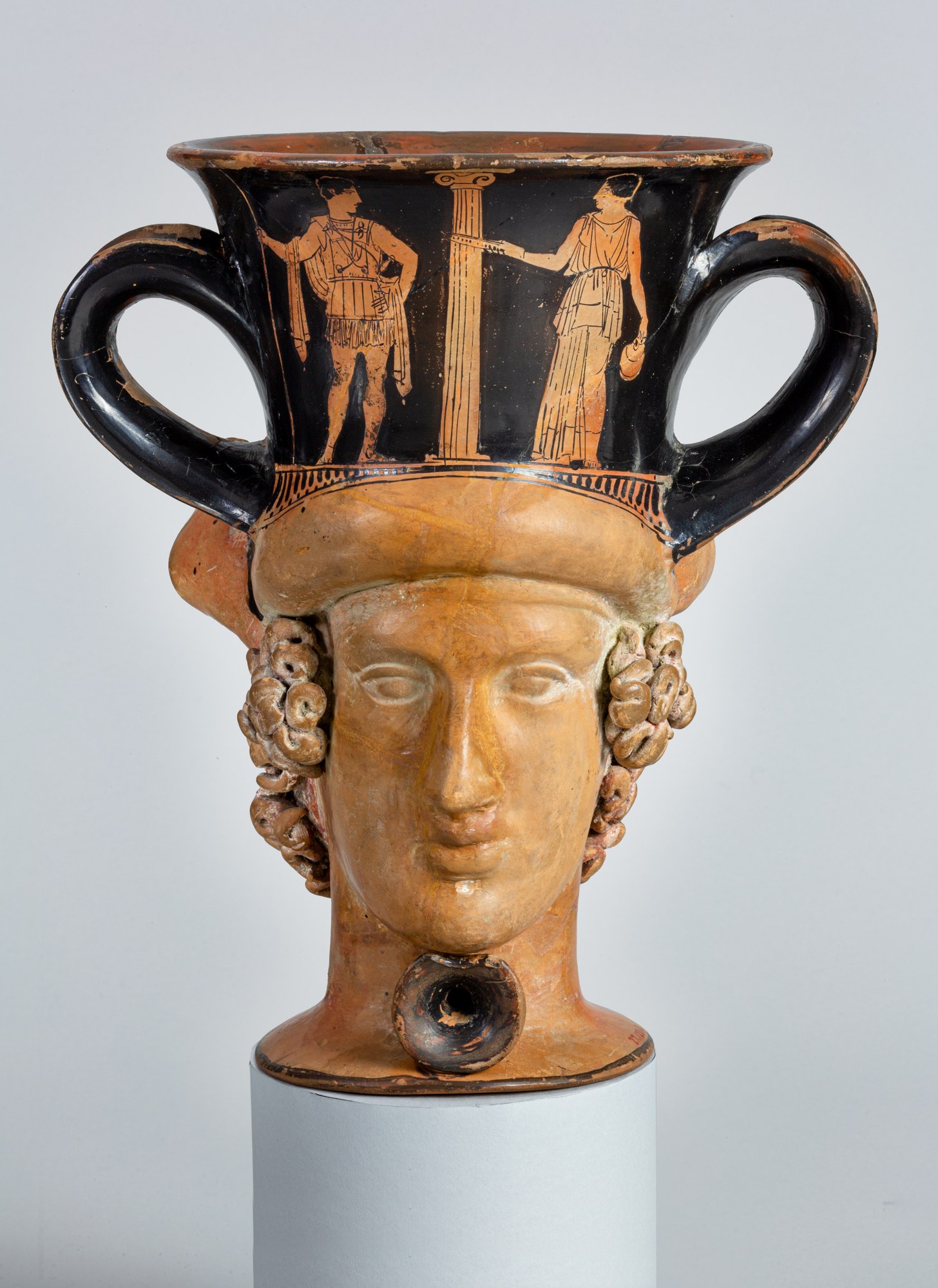
The paired form, in profile
Greek, Attic, c. 420 BCE. Attributed to Aison. The Metropolitan Museum of Art, 27.122.9. Fletcher Fund, 1927.
Museum record ↗
Image: The Met · Public domain / CC0.
The same vessel, another view
Greek, Attic, c. 420 BCE. The Metropolitan Museum of Art, 27.122.9. Fletcher Fund, 1927.
Museum record ↗
Image: The Met · Public domain / CC0.
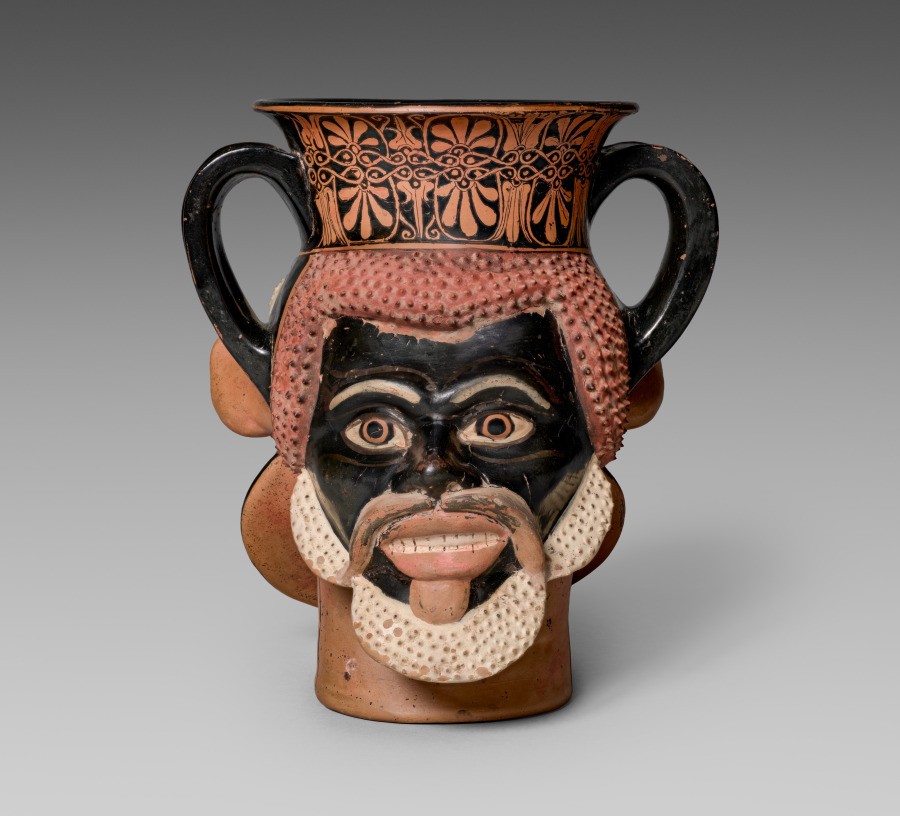
A satyr and an African man
Greek, Attic, c. 470–460 BCE. Assigned to Class K (the Toronto Class). The Cleveland Museum of Art, 1979.69. John L. Severance Fund.
Museum record ↗
Image: Cleveland Museum of Art · CC0.
The other face of the Cleveland cup
Greek, Attic, c. 470–460 BCE. The Cleveland Museum of Art, 1979.69. John L. Severance Fund.
Museum record ↗
Image: Cleveland Museum of Art · CC0.
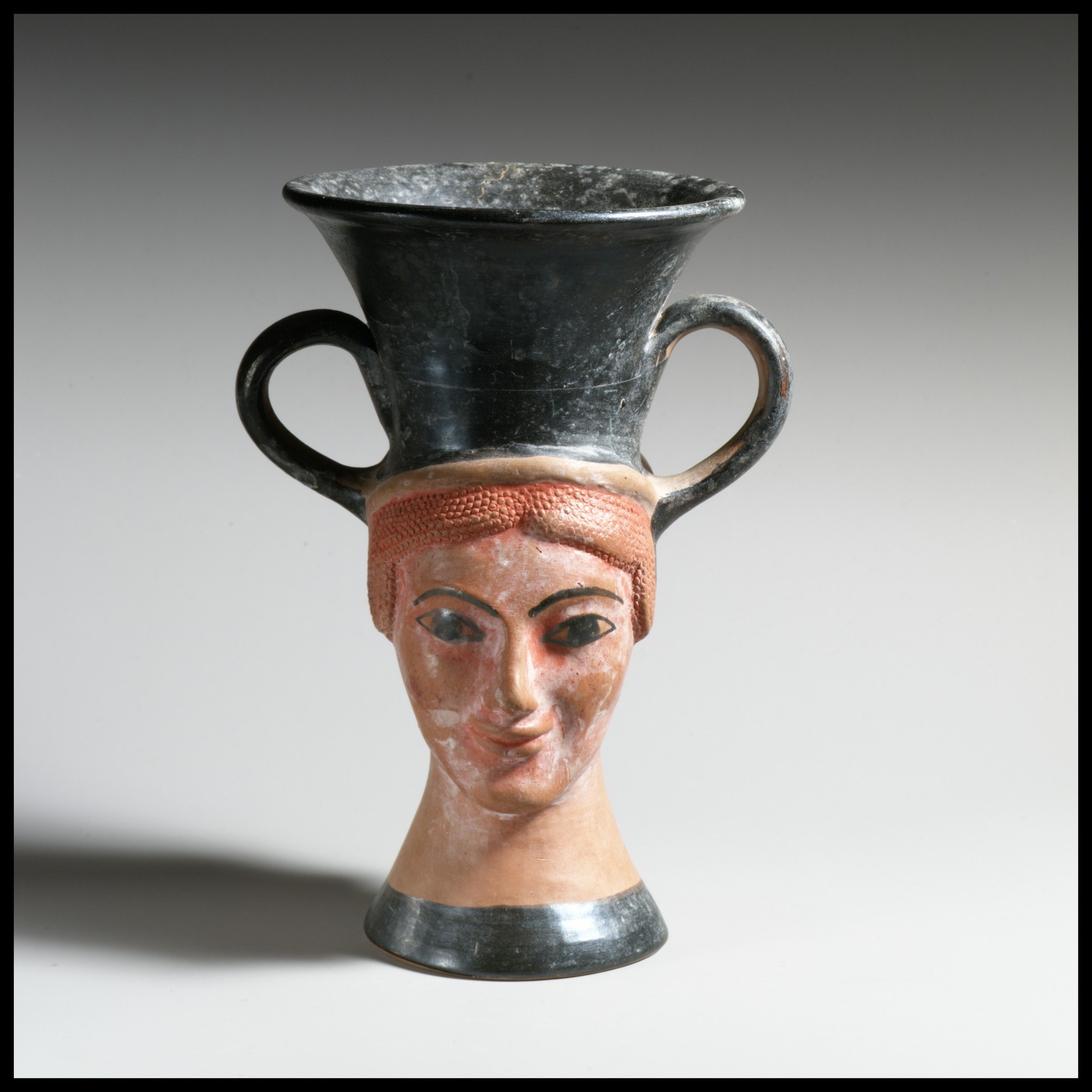
The form in South Italy
Greek, South Italian, Campanian, late 5th century BCE. Terracotta kantharos in the form of two heads. The Metropolitan Museum of Art, 06.1021.41. Rogers Fund, 1906.
Museum record ↗
Image: The Met · Public domain / CC0.
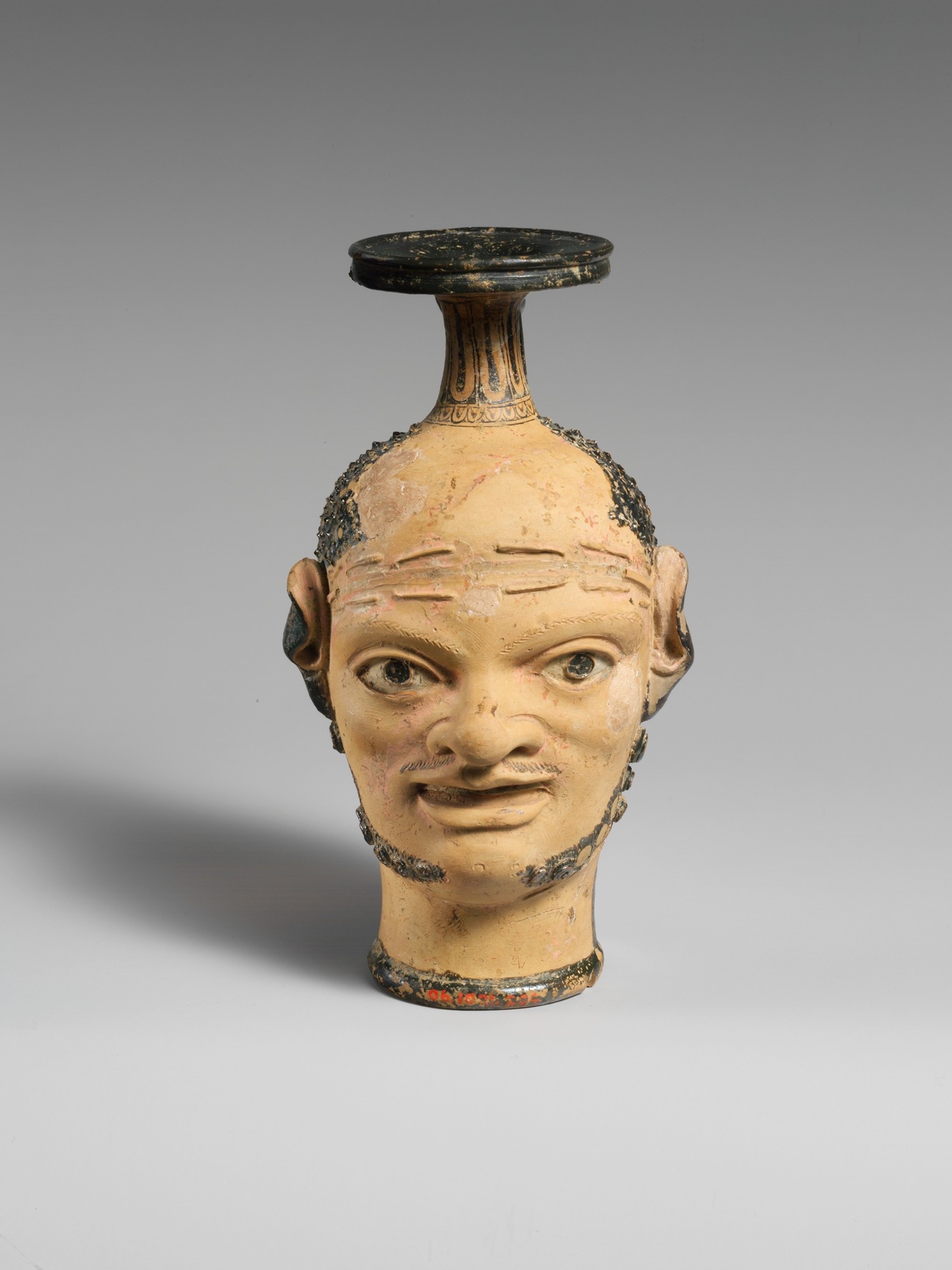
An Etruscan comparison
Etruscan—not Greek—4th century BCE. Terracotta vase with janiform heads. The Metropolitan Museum of Art, 06.1021.204. Rogers Fund, 1906.
Museum record ↗
Image: The Met · Public domain / CC0.